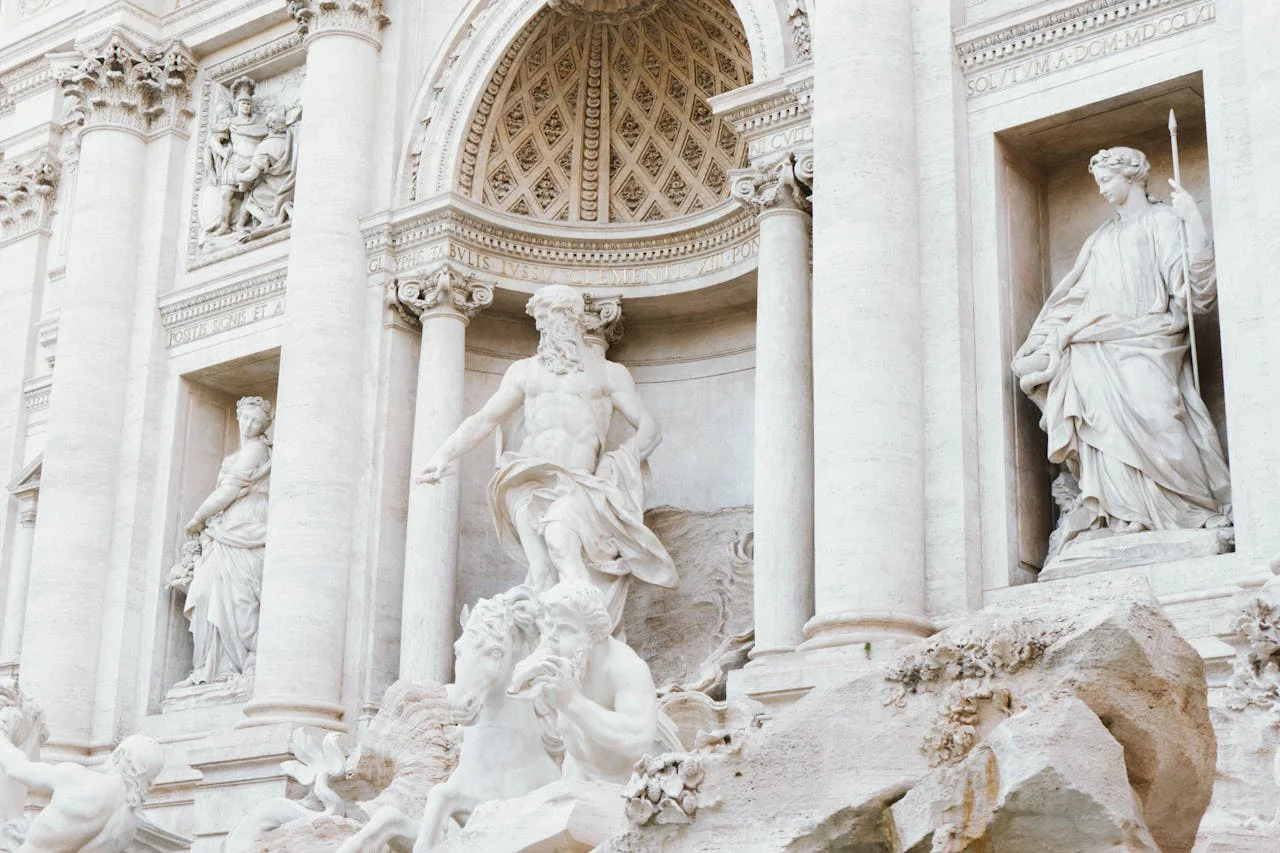
Belief has always found ways to express itself through symbols. In ancient times, these symbols often took the form of gods, myths, and stories that explained the world and gave meaning to everyday life. Over time, as cultures evolved and religious traditions shifted, these figures changed as well. What remained constant, however, was the human need to connect daily life with something greater.
From mythological figures to daily spiritual references
In ancient Greece, gods were not distant or abstract. They were deeply woven into the fabric of everyday existence. People looked to figures like Zeus, Athena, or Apollo not only for explanation, but for guidance. Each god represented certain values, traits, or domains of life, and their presence could be felt in rituals, festivals, and personal reflection.
This connection was not occasional. It was constant. Individuals might dedicate a day to a specific deity, offer prayers, or simply reflect on what that figure represented. In this way, mythology provided a structured yet flexible way of engaging with belief on a daily basis.
As time passed and Christianity spread across Europe, the structure of belief began to change. The focus shifted from multiple gods to a single divine framework, but the need for daily points of reference remained. This is where saints began to take on a similar role.
The rise of the saint of the day
In Christian traditions, especially within Catholic cultures, saints became the figures that bridged the gap between the divine and everyday life. Each saint carried a story, a set of values, and a moment in time that connected them to the calendar.
Instead of looking to a pantheon of gods, people began to look at the saint associated with each day. This created a rhythm similar to what existed in ancient belief systems—each day carried its own meaning, shaped by the life and legacy of a specific individual.
This structure made belief more accessible. It offered a simple way to stay connected without requiring complex rituals. Knowing who was remembered on a given day became enough to create a moment of reflection, even in the middle of ordinary routines.
A shift in meaning, not in purpose
Although the figures changed—from gods to saints—the purpose behind them remained remarkably similar. Both served as anchors for human thought and emotion. They gave people a way to interpret events, to find comfort, and to frame their experiences within a broader narrative.
In Greek mythology, a storm might be seen as the expression of a god’s will. In later traditions, challenges or blessings could be understood through the lives of saints. The interpretation changed, but the underlying need—to find meaning—did not.
This continuity explains why the concept of daily spiritual figures has endured. It adapts to different cultures and beliefs, but it never disappears.
Daily faith in a modern context
Today, the way people engage with these symbols has evolved again. The pace of life is faster, routines are more fragmented, and traditional practices are often simplified. Yet the desire to maintain a daily connection with faith is still present.
For many, this connection takes the form of a brief moment—checking who is remembered that day, reading a short passage, or reflecting quietly. These actions may seem small, but they carry a sense of continuity that links the present with centuries of tradition.
Technology has made this process easier. Information that once required books or local knowledge is now available instantly. This accessibility has helped preserve the habit of daily reflection, even among those who might not follow traditional practices closely.
How the saint of the day fits into modern routines
One of the most interesting developments is how seamlessly the saint of the day has been integrated into modern life. It does not require a dedicated space or a specific time. It can be part of a morning routine, a short pause during the day, or a quiet moment in the evening.
This flexibility mirrors the way ancient people interacted with their gods. The connection was not confined to temples or ceremonies—it was part of daily existence. In a similar way, the saint of the day brings a subtle but meaningful structure to everyday life.
Where tradition meets accessibility
In Italy, where the tradition remains particularly strong, keeping track of the saint of the day is still a common practice. The difference is that it no longer depends on printed calendars or shared memory. It has moved into a more accessible space, where information is easy to find and quick to understand.
For those who want to stay connected to this tradition without complicating their routine, there are simple ways to do it. One approach is to check a reliable source that presents the information clearly and without unnecessary detail. A well-known reference in this context is chesantoeoggi.com, where the saint of the day can be viewed quickly, along with the names associated with it. This kind of access allows the tradition to remain present without demanding extra effort.
A continuity that crosses cultures
What makes this evolution particularly interesting is how it connects different eras and belief systems. Greek mythology and Christian traditions may seem very different on the surface, but they share a common structure: the use of symbolic figures to shape daily understanding.
In both cases, these figures act as a bridge between the abstract and the tangible. They make belief something that can be experienced, not just understood. Whether through a mythological narrative or a saint’s life, the goal is the same—to bring meaning into everyday moments.
Why these symbols still matter
Even in a world that often prioritizes speed and efficiency, there is still space for reflection. Daily symbols of faith provide a simple way to pause, even briefly, and consider something beyond immediate concerns.
They do not require deep knowledge or long rituals. Their strength lies in their simplicity. A name, a story, or a moment of recognition can be enough to create a connection.
This is why the concept has endured for so long. It adapts to new contexts without losing its essence. It remains relevant because it meets a basic human need—the desire to find meaning, even in the smallest parts of the day.
A tradition that continues to evolve
The journey from ancient mythology to modern spiritual practices shows how belief can transform while maintaining its core purpose. The figures may change, the stories may differ, but the role they play in daily life remains consistent.
Today’s world offers new ways to engage with these traditions, making them more accessible than ever. At the same time, the essence of the practice remains unchanged. It is still about connection, reflection, and the search for meaning.
In this sense, daily symbols of faith are not relics of the past. They are living elements of culture that continue to evolve, quietly shaping the way people understand their place in the world.
