
Traveling for a full week with only a carry-on can feel like a small puzzle, especially if your plans include work meetings, dinners out, sightseeing, and unpredictable weather. The trick is not to pack less randomly, but to pack more intentionally. When every item has to earn its place, you start choosing clothes and toiletries that work harder and take up less room.
A well-packed carry-on also makes the trip itself easier. You move faster through airports, skip baggage claim, and avoid the worry of lost luggage. With the right strategy, a single small bag is enough for a week away, whether you are heading to a city break, a beach destination, or a mixed itinerary that calls for a little of everything.
Start with a realistic plan
The best packing decisions happen before you open your suitcase. Think about your destination, the weather, and the shape of your days. A warm-weather holiday with casual dinners requires a very different wardrobe from a business trip in a cooler city. Check the forecast, but also plan for surprises. A light rain jacket may matter more than another pair of sandals.
Make a simple outline of your week. If you will spend two days walking, three days in meetings, and one evening at a nicer restaurant, choose outfits that can move between those settings. A black pair of trousers, for example, can work with a T-shirt during the day and a blouse or button-down at night. This kind of flexibility matters more than bringing a separate look for every occasion.
It also helps to decide what you are willing to repeat. Most people do not need a fresh outfit for every day if they are comfortable rewearing items. A clean, coordinated wardrobe gives you more options without adding bulk.
Choose a small color palette
One of the easiest ways to pack light is to stick to colors that mix and match naturally. Neutral shades such as black, navy, white, beige, olive, and grey are reliable because they pair easily and rarely look out of place. If you like brighter colors, choose one or two accents rather than packing several pieces that only work with one another.
A simple palette makes outfit planning faster and reduces the chance of packing something that sits unused. For example, a white T-shirt, blue shirt, beige trousers, and dark jeans can create several combinations with just a few items. Add a sweater or blazer, and the same pieces start to look more polished.
Patterns can work too, but use them carefully. A striped top or printed dress can add variety, yet too many bold prints can make mixing difficult. If you want your clothes to do more with less, let most of them stay simple.
Build a versatile wardrobe
For a week-long trip, a compact wardrobe usually works better than a full range of separate outfits. Focus on items that layer well and can be styled in different ways. A good rule is to choose clothes you would happily wear more than once if needed, because you probably will.
A practical carry-on wardrobe might include:
- Two to three tops that work with every bottom
- One or two bottoms, such as trousers, jeans, or a skirt
- One dress or smart outfit for dinners or evening plans
- A light layer, such as a cardigan, overshirt, or blazer
- One outer layer suited to the weather
- Enough underwear and socks for the full trip, plus one spare set
Fabric matters as much as style. Thin knits, wrinkle-resistant materials, and breathable fabrics tend to travel well. Denim can be useful, but heavy jeans take up space and can be slow to dry if you wash them on the road. If your itinerary includes a lot of walking, comfortable shoes are essential, but limit yourself to two pairs at most. A pair you can wear all day and a second pair for different conditions is usually enough.
Accessories can change the look of a small wardrobe without adding much weight. A scarf, a belt, or a watch can make the same clothes feel more dressed up. Small details go a long way when your bag is limited.
Use packing methods that save space
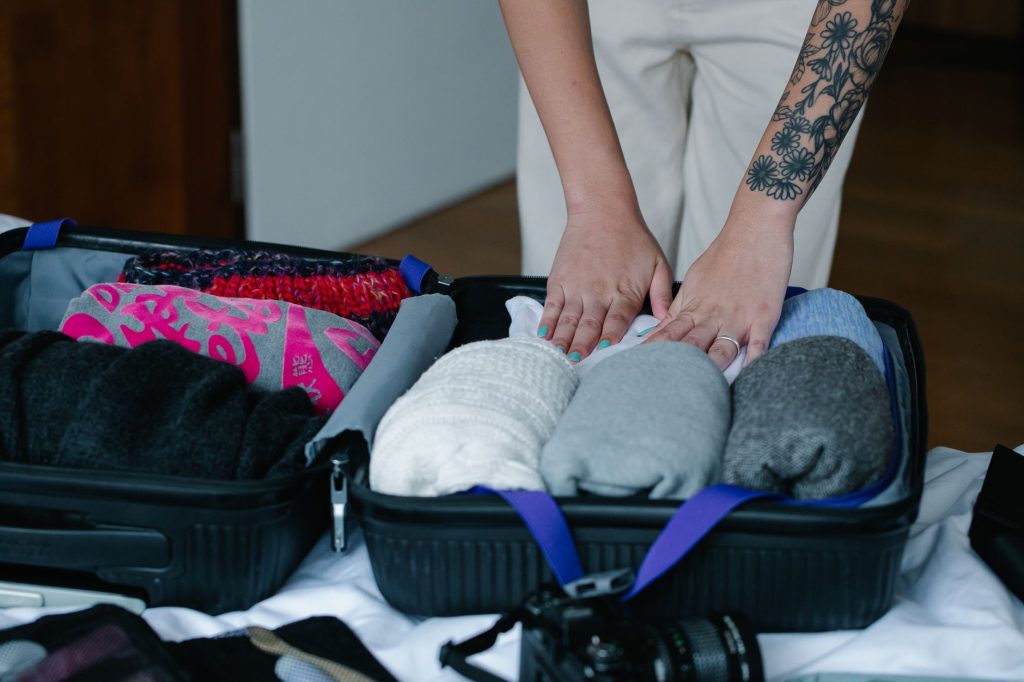
How you pack is almost as important as what you pack. Rolling clothes can help reduce wrinkles and make it easier to fit everything into corners and gaps. Folding works well for structured items like blazers or crisp shirts. In many cases, the best approach is a mix of both.
Packing cubes are useful because they keep categories separate and make it easier to find things without unpacking the entire bag. One cube can hold tops, another underwear and sleepwear, and a smaller one toiletries or cables. This keeps your carry-on organized and prevents the usual pile-up that happens when you are searching for one item at the bottom of the bag.
Compression bags can save more space, but they are not always necessary for a one-week trip. They are most helpful for bulkier clothing, such as sweaters, though they can also make your suitcase too tightly packed if you are not careful. Leave a little room for items you buy during the trip or for clothes you do not want to fold perfectly on the way home.
Place heavier items near the wheels of a rolling suitcase so the bag stays balanced. Keep essentials, like medications, a charger, and travel documents, in an outside pocket or small pouch that you can reach easily. This saves time at security and during the flight.
Keep toiletries and tech minimal
Toiletries are one of the fastest ways to overpack, especially if you are used to larger containers at home. For a carry-on, every liquid must follow airline rules, so it pays to be selective. Choose travel-size items or refill small reusable bottles with only what you will actually use. You do not need a full-size shampoo, conditioner, body wash, facial cleanser, and lotion unless you are checked luggage.
Many hotels and rentals provide basics, so check before you leave. If your accommodation offers soap and shampoo, you can skip them. A small cosmetic bag with your essentials is usually enough: toothbrush, toothpaste, deodorant, cleanser, moisturizer, sunscreen, and any makeup or grooming products you use daily. If you wear contact lenses or special skincare, pack just enough for the week and a little extra.
The same principle applies to electronics. Most travelers need only a phone, charger, earbuds, and perhaps a laptop or tablet. Bring the correct plug adapter if you are traveling internationally, and keep all cords in one pouch so they do not tangle. If you do not truly need a second device, leave it behind.
It can help to prepare a small “first night” kit with the essentials you will want immediately after arrival, such as pajamas, a phone charger, and any medication. That way, you are not digging through your entire bag after a long journey.
Leave room for flexibility
A carry-on works best when it is not packed to the zipper. Leaving a little space gives you room for laundry, souvenirs, or a last-minute change in plan. If you know you will buy gifts or pick up a few items during the trip, start with slightly less than you think you need. A tightly packed bag is harder to repack and more likely to burst open at the wrong moment.
Try on outfits before you leave. This quick step reveals which pieces are uncomfortable, don’t fit the way you remember, or do not really match anything else. It is much easier to remove one unnecessary item at home than to discover the problem after you have arrived.
If you are traveling for work or a special event, pack with the most demanding part of the trip in mind first, then build the rest around it. The goal is not to create a perfect capsule wardrobe. It is to carry enough to feel prepared without dragging around extras you never use. Once you get used to that balance, a week with just a carry-on starts to feel less like a compromise and more like a habit worth keeping.